

How To Turn Off Windows Uac
If you lot accept a network of computers in your home or workplace, 1 of the things you need to control is which users or apps get to change things in that system.
I way to prevent unauthorized changes is to accept one person equally the network ambassador. However, it's not enough but to take i person managing everything, which is where the User Access Control (UAC) feature comes in.

This guide explains what UAC is and how you can disable information technology in Windows 10.
What Is UAC?
UAC is a security feature in Windows 10 that prevents unauthorized or inadvertent changes to the operating organisation. The characteristic was beginning a part of the Windows Vista security system and has since been improved with each new version of Windows.
Such changes can be initiated by users, viruses, malware, or applications. Only if the administrator doesn't approve the changes, they won't be executed.

Amongst the changes that require administrative privileges include:
- Running Job Scheduler
- Making changes to UAC settings
- Windows Update configurations
- Adding or removing user accounts
- Irresolute organisation-wide files or settings in Program File or Windows folders
- Viewing or changing other users' files or folders
- Running apps as administrator
- Installing or uninstalling apps and drivers
- Changing Windows Firewall or organisation date and time settings
- Configuring Family Prophylactic or Parental Controls
- Changing users' account blazon
Each time you run a desktop app that requires admin permissions, the UAC pops up. You'll besides see it when you want to alter important system settings that require admin approval.
Any users on your network can sign into their computers using a standard user business relationship, but any processes they launch will be performed using access rights granted to a standard user.
For instance, any apps started using Windows Explorer will run with standard user level permissions. This includes apps included with Windows 10 itself.
For legacy apps, which aren't designed with security in mind, additional permissions are frequently required to run successfully. More permissions are required for actions such as installing new software and changing Windows Firewall configurations, equally this requires administrator account level permissions.
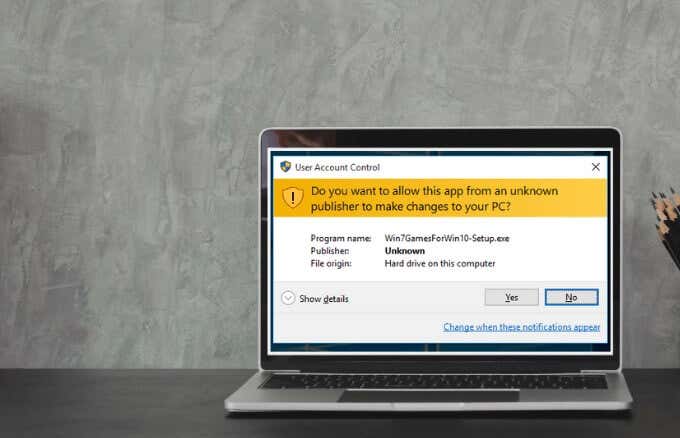
If you need to run an app that requires more than than standard account user rights, you tin can restore more user groups to the token in social club to manage apps that make organisation level changes to your computers or devices.
For families, there's an option to create a dedicated Kid business relationship that comes with diverse limitations and integrated parental controls and monitoring. Acquire more than in our Microsoft Family business relationship and how to add a family fellow member to your Microsoft business relationship guides.
UAC Slider Levels in Windows x and What They Mean
In Windows Vista, there were simply two UAC options: On or Off. In Windows 10 however, in that location are iv UAC levels to choose from:
- Always Notify: Notifies you earlier users and apps make changes that require admin permissions. It also freezes other tasks until you lot respond, and is recommended if you oft visit unfamiliar websites or install new software.
- Notify me only when programs/apps attempt to make changes to my computer: Notifies you when programs try to make changes to your computer or install software. This level also freezes other tasks until you respond, but information technology won't notify you when you make changes to Windows settings.
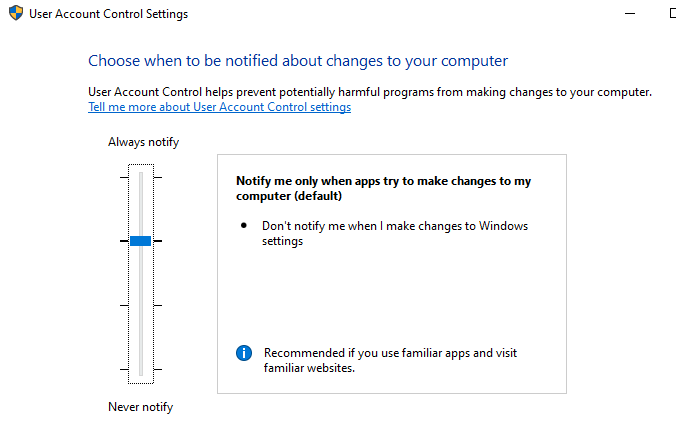
- Notify me only when programs/apps try to brand changes to my estimator (do not dim my desktop): Notifies y'all when a program tries to make changes or install software on your computer. Information technology doesn't notify you when y'all make changes to Windows settings and doesn't freeze tasks until you respond. Choose this level only if it takes long to dim your computer's desktop.
- Never notify: Doesn't notify you when a program tries to make changes, install software, or when you modify Windows settings. This setting isn't recommended, particularly if you don't have a good security suite as it'south much easier for viruses and malware to infect your reckoner with UAC turned off.
How to Disable UAC in Windows ten
Notation: We don't recommend disabling UAC on your computer as doing this makes it easier for malicious programs to infect and manage your reckoner. If there are apps that keep triggering UAC, apply Windows Task Scheduler to run those apps without admin rights and UAC prompts first, instead of disabling UAC altogether.
If you still want to disable UAC, you tin can do it via Command Panel, Grouping Policy, Registry Editor, or using a Command Line.
How to Disable UAC Using Control Panel
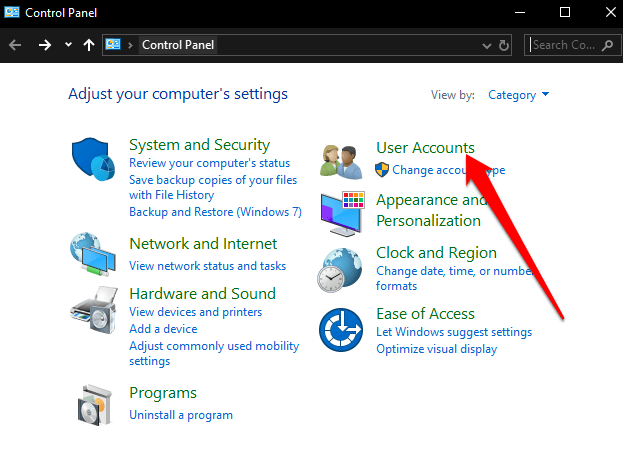
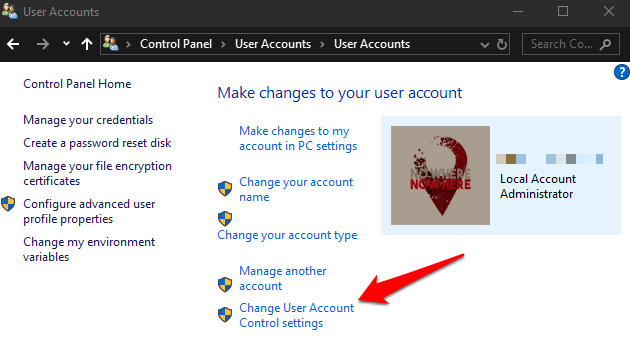
- Open Control Panel and select User Accounts.
- Select User Accounts again.
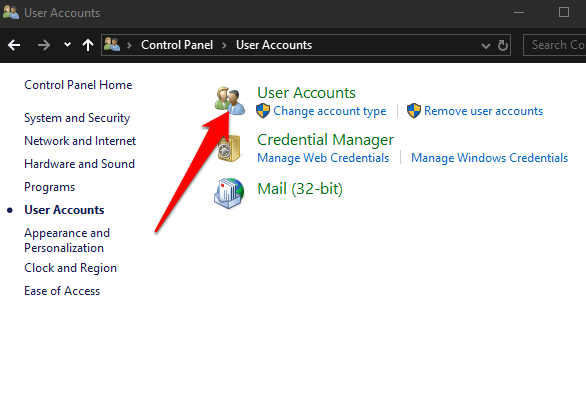
- Next, select Change User Account Command settings.
- If y'all want to completely disable UAC, drag the slider to Never notify to turn UAC off and then click OK.
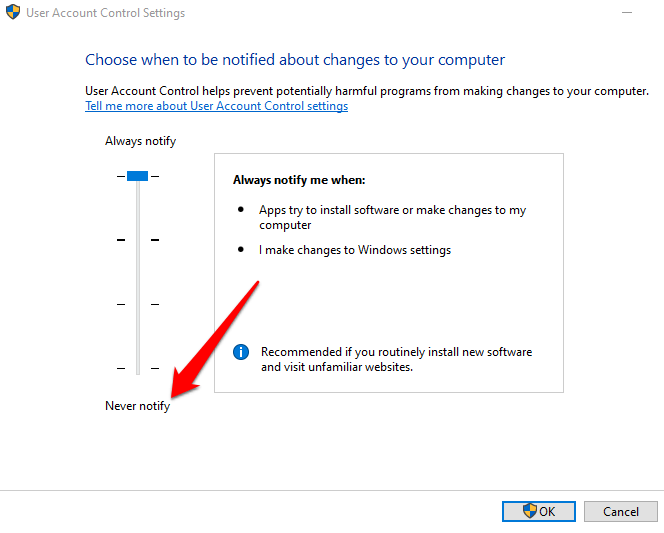
To turn UAC back on, elevate the slider to the security level you want and then click OK. Confirm your selection or enter your admin password if prompted to, and and so restart your computer to keep the changes.
How to Disable UAC Using a Command Line
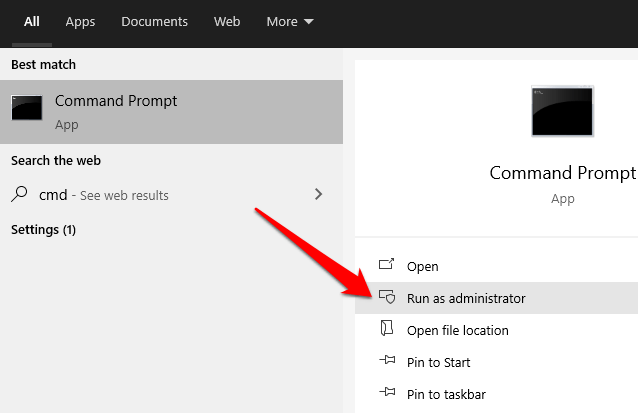
- To exercise this, blazon CMD in the search box, and select Run as administrator.
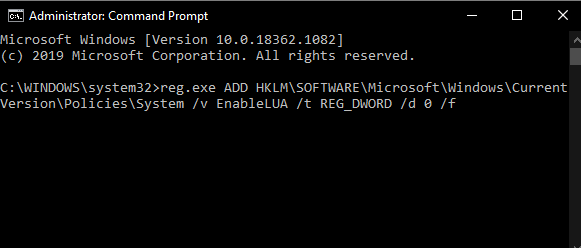
In the Command Prompt box, enter this control and press Enter:
reg.exe Add together HKLM\SOFTWARE\Microsoft\Windows\CurrentVersion\Policies\System /5 EnableLUA /t REG_DWORD /d 0 /f
- Restart your computer for the changes to accept consequence.
If you desire to enable or turn UAC on over again, enter this command:
reg.exe ADD HKLM\SOFTWARE\Microsoft\Windows\CurrentVersion\Policies\System /five EnableLUA /t REG_DWORD /d 1 /f
How to Disable UAC Using Group Policy Editor
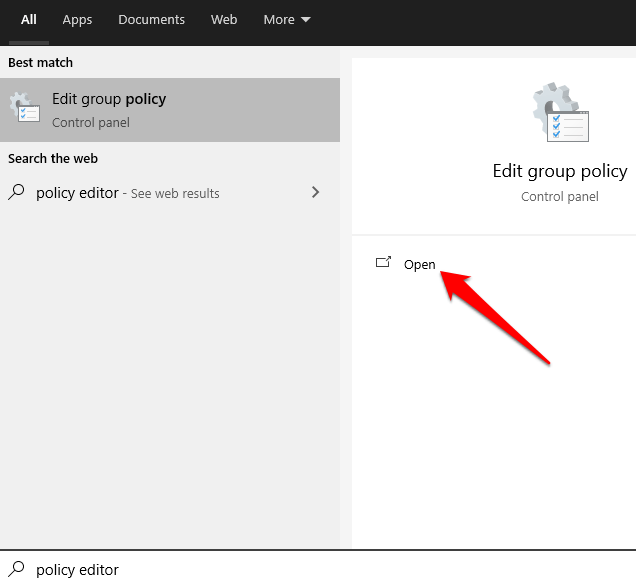
- To do this, type Policy Editor in the search box and select Edit Grouping Policy.
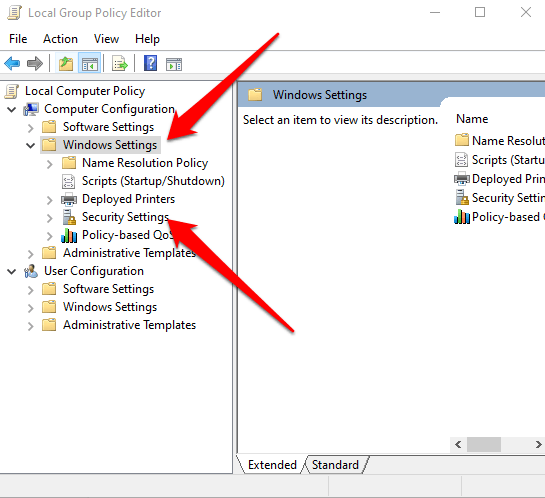
- Select Calculator Configuration > Windows Settings and so select Security Settings.
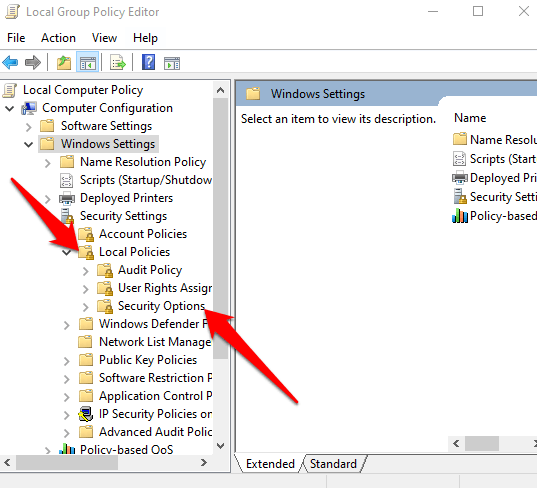
- Next, select Local Policies > Security Options.
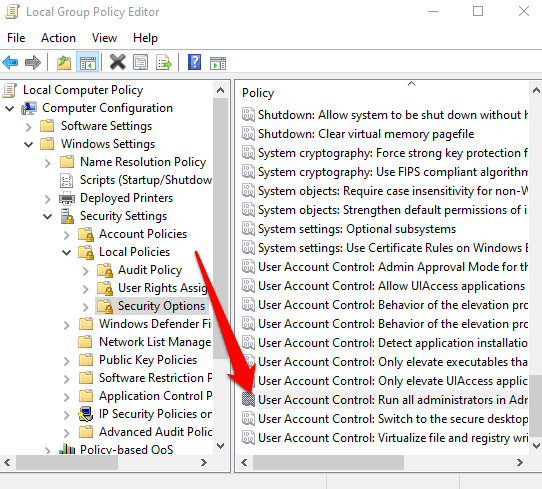
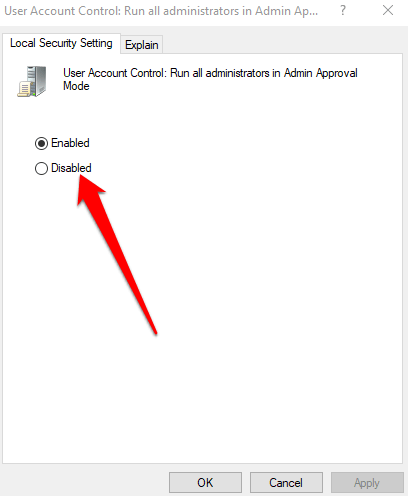
- Scroll downwardly and double-click on User Account Command: Run all administrators in Admin Approving Fashion.
- Select Disabled > OK.
How to Disable UAC Using Windows Registry
You tin can also disable UAC via the Windows Registry. Yet, before you do that, make sure you back up the registry to avert any system issues.
- To disable UAC via Windows Registry, right-click Showtime > Run, enter regedit.exe and press Enter on your keyboard.
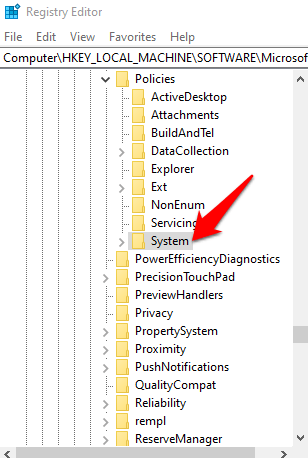
- Follow the path: HKEY_LOCAL_MACHINE\SOFTWARE\Microsoft\Windows\CurrentVersion\Policies\System
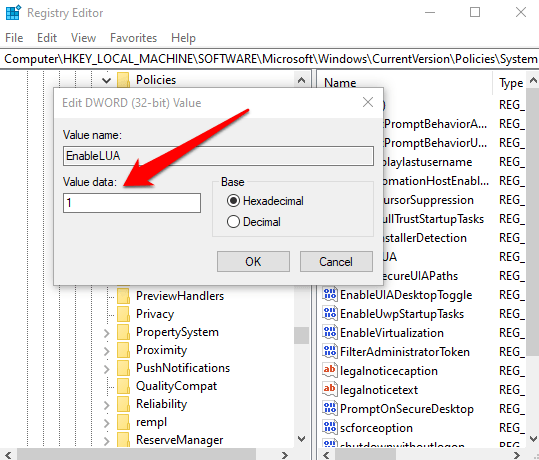
- Next, double-click on the primal EnableLUA and alter the value information to 0.
- Save the changes and reboot your computer.
Take Control of Your Accounts
UAC makes all the difference betwixt standard user accounts and ambassador accounts. With the feature, y'all have a bones level organization security that helps salvage your system from malicious processes even with a security suite in place.
Were you able to disable UAC on your computer? Share with the states in the comments.
Do not share my Personal Information.
Source: https://www.online-tech-tips.com/windows-10/what-is-uac-in-windows-10-and-how-to-disable-it/
Posted by: whiteknotans.blogspot.com
0 Response to "How To Turn Off Windows Uac"
Post a Comment